
For superior core activation, stability, and overall abdominal development with reduced spinal strain, the ab roller generally offers better results than traditional sit-ups when performed correctly.
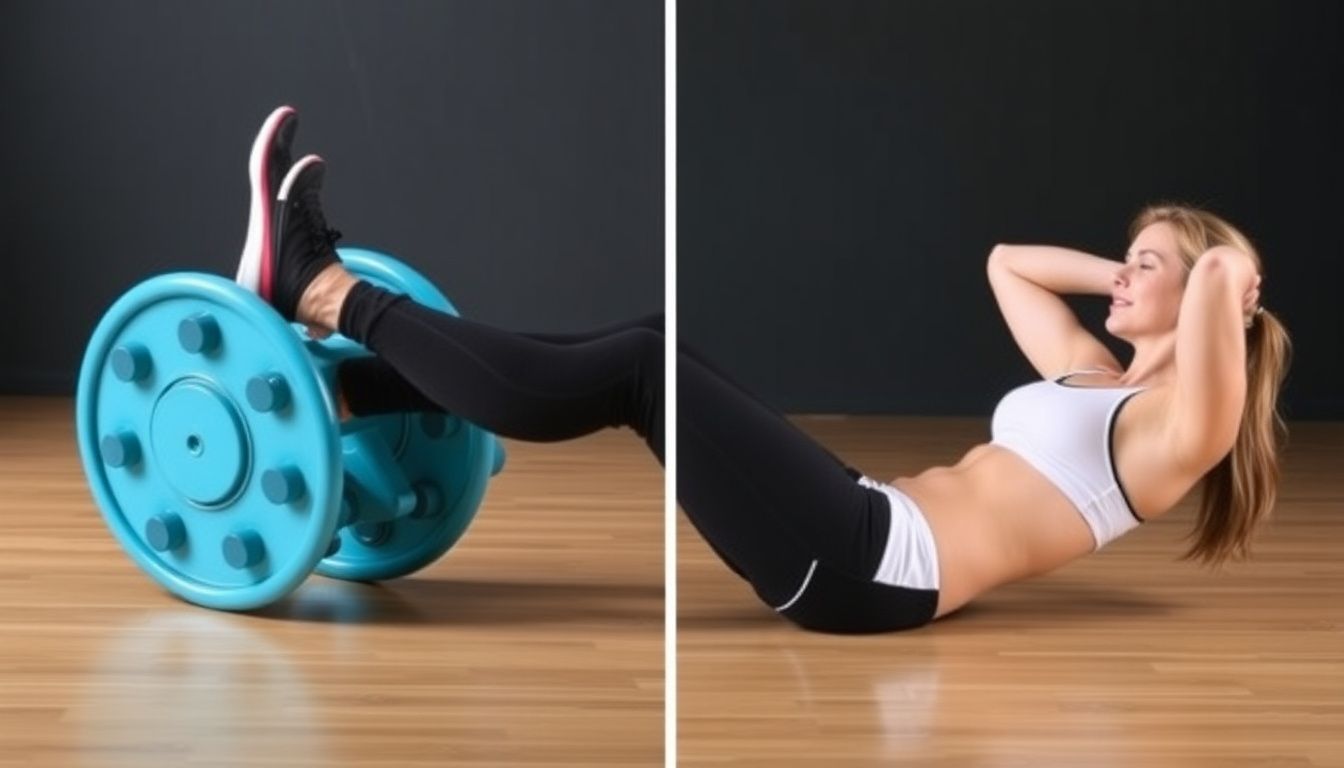
The quest for a strong, sculpted core often leads fitness enthusiasts down many paths, but few debates are as persistent as Ab Roller vs Sit-Ups: Which One Gives Better Results? Both exercises target the abdominal muscles, yet their mechanics, muscle engagement, and potential risks differ significantly. Understanding these nuances is crucial for optimizing your core training, ensuring you’re not just working hard, but working smart towards your fitness goals.
This comprehensive guide will dissect the mechanics, benefits, and drawbacks of both the ab roller and sit-ups, providing you with the insights needed to make an informed decision. You’ll discover which exercise offers greater muscle activation, better injury prevention, and ultimately, which one aligns best with your personal fitness objectives. Prepare to empower your core training with evidence-based knowledge and practical advice.
The Mighty Ab Roller: Unlocking Dynamic Core Power
The ab roller, a seemingly simple piece of equipment, is a powerhouse for developing core strength and stability. It engages a wide array of muscles beyond just the superficial abs, making it a highly effective tool for those serious about their midsection. This dynamic movement demands significant control and coordination, challenging your core in a way many traditional exercises cannot.
When you perform an ab roll-out, your entire anterior core chain—including the rectus abdominis, obliques, transverse abdominis, and even your lats and hip flexors—works synergistically to stabilize your spine and control the movement. This comprehensive engagement is why many experts consider it a superior functional exercise. Moreover, the progressive resistance as you extend further creates an intense eccentric contraction, which is excellent for muscle growth and endurance.
Pros of Incorporating the Ab Roller into Your Routine
The benefits of the ab roller extend far beyond just aesthetics, offering significant functional advantages for overall athleticism and injury prevention.
- Superior Core Activation: Studies, such as those published in the Journal of Strength and Conditioning Research, indicate that ab roller exercises elicit higher activation in the rectus abdominis and obliques compared to standard crunches or sit-ups. This means more muscle fibers are working harder.
- Enhanced Stability and Balance: The unstable nature of the ab roller forces your deep core stabilizers to work overtime, improving overall trunk stability, which is vital for athletic performance and daily activities.
- Reduced Spinal Compression: Unlike sit-ups, which involve repeated spinal flexion, the ab roller maintains a relatively neutral spine during the movement, potentially reducing stress on the lumbar discs.
- Full-Body Engagement: While primarily a core exercise, the ab roller also engages the shoulders, arms, and lats, making it a more compound movement than many isolated abdominal exercises.
- Portability and Affordability: An ab roller is compact, lightweight, and typically inexpensive, making it an accessible fitness tool for home workouts or travel.
Cons and Crucial Safety Considerations for Ab Roller Use
Despite its impressive benefits, the ab roller is not without its challenges and potential risks, especially for beginners or those with pre-existing conditions.
- Requires Significant Core Strength: The ab roller is an advanced exercise. Attempting it without foundational core strength can lead to improper form and increased risk of lower back injury.
- Potential for Lower Back Strain: If the core disengages or the hips sag during the extension phase, the lower back can hyperextend, leading to significant strain or injury. Maintaining a neutral spine is paramount.
- Demands Proper Form: Correct technique is absolutely critical. A slight deviation in form can shift the load from the abs to the lower back, negating benefits and increasing risk.
- Limited Accessibility for Beginners: Individuals new to core training may find the full ab roll-out too challenging initially. Modifications, like performing it on your knees or against a wall, are often necessary.
Sit-Ups: The Traditional Core Staple Under the Microscope
Sit-ups have been a cornerstone of abdominal training for decades, synonymous with core strength and military fitness tests. They involve lying on your back and lifting your torso towards your knees, primarily targeting the rectus abdominis and hip flexors. While seemingly straightforward, the effectiveness and safety of sit-ups have been a subject of ongoing debate in the fitness community.
The primary action of a sit-up is spinal flexion, which means bending your spine forward. This repetitive motion, especially when performed with poor form or high volume, can place considerable stress on the lumbar spine. However, for many, sit-ups remain a familiar and accessible exercise that requires no equipment, making them a popular choice for quick core workouts.
The Enduring Advantages of Traditional Sit-Ups
Despite modern criticisms, sit-ups still offer certain advantages, particularly for those looking for a basic, accessible core exercise.
- No Equipment Needed: This is perhaps the biggest advantage. Sit-ups can be performed anywhere, anytime, making them incredibly convenient.
- Familiarity and Simplicity: Most people are familiar with the sit-up movement, making it easy to learn and incorporate into a routine without complex instructions.
- Targets Rectus Abdominis: Sit-ups effectively engage the rectus abdominis, the “six-pack” muscle, contributing to its definition and strength.
- Improves Hip Flexor Strength: While often cited as a drawback, strong hip flexors are beneficial for activities like running, jumping, and kicking.
Significant Drawbacks and Injury Risks of Sit-Ups
The criticisms against sit-ups are substantial, primarily revolving around spinal health and muscle imbalances.
- High Spinal Compression: Repetitive spinal flexion, especially under load or with momentum, can place significant compressive and shearing forces on the intervertebral discs of the lower back. Over time, this can contribute to disc issues and chronic back pain.
- Excessive Hip Flexor Engagement: Sit-ups heavily recruit the hip flexors. Overdevelopment of these muscles relative to the core can lead to muscle imbalances, anterior pelvic tilt, and further lower back discomfort.
- Limited Core Stabilization: While they build rectus abdominis strength, sit-ups do not effectively train the deeper stabilizing muscles of the core, like the transverse abdominis, which are crucial for spinal support.
- Potential for Poor Form: Many individuals compensate by using momentum or pulling on their neck, which can lead to neck strain and reduce the effectiveness of the exercise for the abs.

Ab Roller vs Sit-Ups: Which One Gives Better Results for Your Goals?
When comparing Ab Roller vs Sit-Ups: Which One Gives Better Results?, the answer largely depends on your specific fitness goals, current fitness level, and understanding of proper biomechanics. Neither exercise is inherently “bad,” but one is certainly more efficient and safer for comprehensive core development.
For individuals seeking maximum core strength, stability, and functional fitness with a lower risk of spinal injury (when performed correctly), the ab roller is often the superior choice. It challenges the entire core musculature to stabilize the spine, promoting a more balanced and resilient midsection. Conversely, sit-ups are better suited for specific fitness tests or as a basic exercise for beginners who are developing initial rectus abdominis strength, provided they are performed with strict control and awareness of spinal health.
| Aspect | Ab Roller | Sit-Ups |
|---|---|---|
| Primary Muscles Targeted | Rectus Abdominis, Obliques, Transverse Abdominis, Lats, Hip Flexors | Rectus Abdominis, Hip Flexors |
| Core Stability Focus | High (dynamic stability, anti-extension) | Low (focus on spinal flexion) |
| Spinal Health Impact | Low risk (maintains neutral spine when correct) | High risk (repetitive spinal flexion, compression) |
| Equipment Required | Ab roller wheel | None |
| Difficulty Level | Advanced (requires foundational strength) | Beginner to Intermediate |
| Functional Strength | Excellent (improves anti-extension, full core bracing) | Limited (focus on isolated flexion) |
Maximizing Your Core Training: Best Practices and Alternative Exercises
To truly maximize your core training, it’s essential to incorporate a variety of exercises that challenge your core in different planes of motion and functions. Focusing solely on one movement, whether it’s the ab roller or sit-ups, can lead to imbalances. A well-rounded core routine should include anti-extension, anti-flexion, anti-rotation, and lateral flexion movements.
For those looking to build incredible core strength and resilience, consider a program that strategically integrates exercises. For instance, start with foundational movements like planks and bird-dog exercises to build baseline stability. Once proficient, you can gradually introduce the ab roller, initially from your knees, progressing to a standing roll-out. Always prioritize perfect form over the number of repetitions.
Key Principles for Effective Core Work:
- Prioritize Form Over Reps: Incorrect form negates benefits and increases injury risk. Focus on controlled movements.
- Engage the Transverse Abdominis: Learn to brace your core as if preparing for a punch. This engages your deep stabilizing muscles.
- Breathe Properly: Exhale on exertion to further engage your core muscles and stabilize your spine.
- Progress Gradually: Don’t jump into advanced variations too soon. Build a strong foundation first.
Powerful Alternatives for a Rock-Solid Core:
- Plank Variations: Forearm plank, side plank, plank with shoulder taps – excellent for static anti-extension and anti-rotation.
- Leg Raises: Target the lower abs and hip flexors without excessive spinal flexion when performed with control.
- Hanging Knee Raises/Leg Raises: Advanced exercises that provide a significant challenge to the entire core.
- Pallof Press: Fantastic for anti-rotational core strength, using a cable machine or resistance band.
- Bird-Dog: A fundamental exercise for improving core stability and coordination, particularly beneficial for spinal health.
- Cable Crunches: Allows for weighted resistance in a controlled spinal flexion movement, often preferred over sit-ups for progressive overload.
Frequently Asked Questions
Is the ab roller good for beginners?
The ab roller is generally considered an advanced core exercise. Beginners should start with foundational exercises like planks, bird-dogs, and dead bugs to build adequate core strength and stability before attempting the ab roller, even from the knees.
Can ab rollers hurt your back?
Yes, if performed with improper form or without sufficient core strength, the ab roller can put significant strain on your lower back. It’s crucial to maintain a neutral spine and engage your core throughout the entire movement to prevent hyperextension.
Are sit-ups effective for getting a six-pack?
Sit-ups can contribute to strengthening the rectus abdominis, which is the muscle responsible for the “six-pack” appearance. However, achieving visible abs primarily depends on reducing body fat through diet and overall training, not just isolated ab exercises.
What’s a safer alternative to sit-ups for core strength?
Many exercises are safer and more effective than traditional sit-ups for comprehensive core development. Planks, dead bugs, bird-dogs, cable crunches, and anti-rotational exercises like the Pallof press are excellent alternatives that prioritize spinal health.
How often should I use an ab roller?
For most individuals, 2-3 times per week is sufficient for ab roller training, allowing adequate recovery for the core muscles. Incorporate it into a balanced routine that includes other core stability and strength exercises.
Do ab rollers work the lower abs?
While the rectus abdominis works as a single muscle, the ab roller effectively engages the entire abdominal wall, including what people commonly refer to as the “lower abs.” The dynamic nature of the movement forces comprehensive engagement for stability and control.
Final Thoughts on Ab Roller vs Sit-Ups: Which One Gives Better Results?
In the perennial debate of Ab Roller vs Sit-Ups: Which One Gives Better Results?, the evidence strongly points towards the ab roller as the superior choice for comprehensive core development and functional strength, provided it’s executed with impeccable form. Its ability to activate a broader range of core muscles, enhance stability, and minimize spinal compression makes it a powerful tool for those committed to building a resilient and powerful midsection. While sit-ups offer accessibility, their limitations in terms of spinal health and muscle engagement often outweigh their convenience for serious fitness goals.
Ultimately, the best approach to core training involves a diverse range of exercises that challenge your abdominal muscles from multiple angles and functions. Embrace the dynamic power of the ab roller once you’ve built foundational strength, and integrate other stability-focused movements to forge a truly unbreakable core. Start prioritizing intelligent core training today to unlock peak performance and safeguard your spinal health for years to come.