

Yes, resistance bands absolutely build muscle by providing sufficient tension to stimulate muscle protein synthesis, leading to hypertrophy and increased strength.
The question of “do resistance bands build muscle” is a common one, especially as more people seek versatile and accessible fitness solutions. Historically, free weights and machines have dominated the conversation around strength training and muscle growth, but resistance bands have emerged as a powerful, portable, and often underestimated tool. These elastic bands can effectively challenge your muscles, creating the necessary stimulus for growth, making them an excellent option for home workouts, travel, or supplementing gym routines.
This comprehensive guide will delve into the science behind how resistance bands work, explore their unique advantages for muscle building, and provide actionable strategies to maximize your gains. You’ll discover how to implement progressive overload with bands, compare their effectiveness to traditional weights, and learn to design a potent resistance band workout that truly transforms your physique. Prepare to unlock the full potential of these elastic powerhouses for significant muscular development.
The Science of Strength: How Resistance Bands Build Muscle Effectively
To truly understand how resistance bands build muscle, we must first grasp the fundamental principles of muscle hypertrophy. Muscle growth occurs when muscle fibers are subjected to sufficient mechanical tension, causing microscopic damage. In response, the body repairs and rebuilds these fibers stronger and larger, a process known as muscle protein synthesis. Resistance bands, despite their simple appearance, are incredibly effective at generating this crucial tension.
Unlike free weights, which rely on gravity, resistance bands provide linear variable resistance. This means the tension increases as the band is stretched further. This unique characteristic offers several benefits for muscle building. For instance, the peak contraction phase of an exercise often receives the most resistance, which can lead to a deeper muscle activation and a more intense stimulus for growth. This constant tension throughout the entire range of motion ensures that your muscles are engaged from start to finish, fostering greater time under tension.
Understanding Variable Resistance and Muscle Activation
The variable resistance of bands is a game-changer. Imagine a bicep curl: with a dumbbell, the heaviest part of the lift is often at the beginning as you overcome gravity. With a resistance band, the resistance progressively increases as your bicep contracts and the band stretches. This means your muscle has to work harder through the entire movement, particularly at the top of the contraction where muscles are typically strongest. This continuous challenge helps recruit more muscle fibers, promoting comprehensive development.
Moreover, bands force greater stabilization. When performing exercises with bands, your stabilizing muscles work overtime to control the movement and prevent the band from snapping back or shifting. This enhanced core and stabilizer activation contributes to overall functional strength and can help prevent injuries. The constant tension and stabilization demands make resistance bands a highly effective tool for stimulating muscle growth across various muscle groups.
Unlocking Hypertrophy: Can Resistance Bands Truly Build Muscle Mass?
The short answer is a resounding yes, resistance bands can absolutely build muscle mass. The key lies in understanding and applying the principles of progressive overload, just as you would with any other form of strength training. Muscle hypertrophy isn’t about the *type* of resistance, but rather the *amount* of resistance and the *intensity* of the stimulus.
Many studies support the efficacy of resistance bands for muscle growth. For example, a 2019 meta-analysis published in the journal “Sports Medicine” concluded that resistance band training can produce similar strength and hypertrophy gains to conventional free-weight training in both trained and untrained individuals. This evidence directly addresses the core question: do resistance bands build muscle effectively for real, visible gains?
The Role of Progressive Overload with Bands
Progressive overload is the cornerstone of muscle building. It means continually increasing the demands placed on your muscles to force adaptation. With resistance bands, this can be achieved in several ways:
- Increasing Band Resistance: Using thicker or stronger bands.
- Increasing Repetitions: Performing more reps with the same band.
- Increasing Sets: Adding more sets to your workout.
- Decreasing Rest Times: Reducing the time between sets to increase intensity.
- Increasing Time Under Tension: Slowing down the eccentric (lowering) phase of an exercise.
- Combining Bands: Using multiple bands simultaneously for compounded resistance.
By consistently challenging your muscles with these methods, you ensure they continue to adapt and grow. Don’t underestimate the potential of stacking bands; combining a light and a medium band can provide a resistance level that far exceeds what a single heavy band might offer, pushing your muscles to their limits.
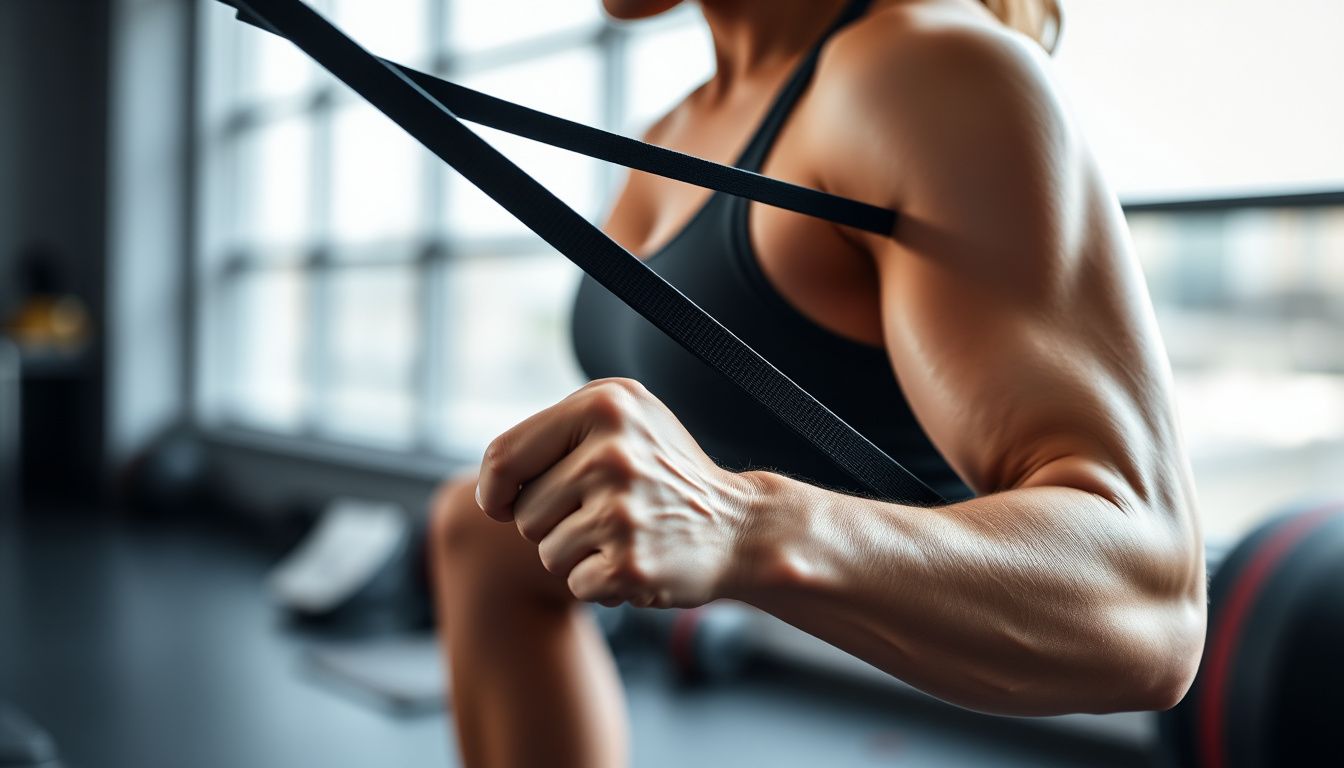
Maximizing Your Gains: Designing an Effective Resistance Band Workout
To truly capitalize on the muscle-building potential of bands, you need a well-structured workout plan. An effective resistance band routine should target all major muscle groups, incorporate a variety of exercises, and prioritize proper form. Thinking beyond simple bicep curls is crucial; bands can be utilized for compound movements that work multiple muscles simultaneously, just like barbells or dumbbells.
A typical full-body resistance band workout might include exercises like banded squats, push-ups with a band looped around your back, banded rows, overhead presses, and glute bridges. Aim for 3-4 sets of 8-15 repetitions for most exercises, selecting a band that allows you to reach muscle fatigue within that rep range while maintaining good form. Remember, the goal is to create enough tension to stimulate muscle fibers, not just to move the band.
Sample Full-Body Resistance Band Routine for Muscle Building
Here’s a practical example of how to structure a workout to ensure you do resistance bands build muscle across your entire physique:
- Banded Squats: Stand on the band, holding the ends at shoulder height. Perform squats. (3 sets of 10-15 reps)
- Banded Push-ups: Loop a band around your upper back, holding the ends under your hands. Perform push-ups. (3 sets to failure)
- Banded Rows: Anchor the band to a sturdy object or stand on it. Pull the band towards your torso, squeezing your shoulder blades. (3 sets of 12-15 reps)
- Banded Overhead Press: Stand on the band, holding the ends at shoulder height. Press overhead. (3 sets of 10-12 reps)
- Banded Glute Bridges: Loop a band around your thighs, just above the knees. Lie on your back, knees bent, feet flat. Push hips up, pushing knees out against band. (3 sets of 15-20 reps)
- Banded Bicep Curls: Stand on the band, holding the ends. Curl arms up. (3 sets of 12-15 reps)
- Banded Tricep Extensions: Anchor the band overhead or behind your back. Extend arms. (3 sets of 12-15 reps)
Ensure a 60-90 second rest between sets to allow for partial recovery, enabling you to maintain intensity for subsequent sets. Consistency and proper form are paramount for seeing significant muscle development.
Resistance Bands vs. Free Weights: A Comparative Look at Muscle Building Potential
When evaluating “do resistance bands build muscle” in comparison to free weights, it’s not necessarily about which is superior, but rather how each tool excels and how they can complement each other. Both free weights and resistance bands are excellent for building muscle, but they offer distinct advantages and disadvantages.
Free weights provide constant resistance throughout the entire range of motion (though gravity’s leverage changes), are easily quantifiable, and allow for very heavy loads. They are excellent for pure strength and maximal lifts. Resistance bands, conversely, offer variable resistance, are highly portable, safer for solo workouts, and can be used for rehabilitation or to add accommodating resistance to free weight exercises.
When to Choose Bands, When to Choose Weights
Understanding the scenarios where each tool shines can optimize your training. For absolute maximal strength development and lifting incredibly heavy loads, free weights often have an edge due to their capacity for progressive increases in weight. However, for functional strength, injury prevention, and convenience, bands are often superior.
| Aspect | Resistance Bands | Free Weights |
|---|---|---|
| Resistance Type | Variable (increases with stretch) | Constant (gravity-dependent) |
| Portability | Excellent (lightweight, compact) | Poor (heavy, bulky) |
| Safety (Solo) | High (low risk of crushing/dropping) | Moderate (spotter often needed for heavy lifts) |
| Muscle Stabilization | High (constant tension and control) | Moderate (movement path more fixed) |
| Progressive Overload | Achieved through band thickness, reps, sets, tempo, stacking | Achieved through weight increments, reps, sets |
Ultimately, a hybrid approach often yields the best results. Using bands for warm-ups, accessory work, or even combining them with weights (e.g., banded deadlifts or bench presses) can provide a comprehensive training stimulus that maximizes both strength and hypertrophy. The versatility of bands means they can fill gaps in any training program.
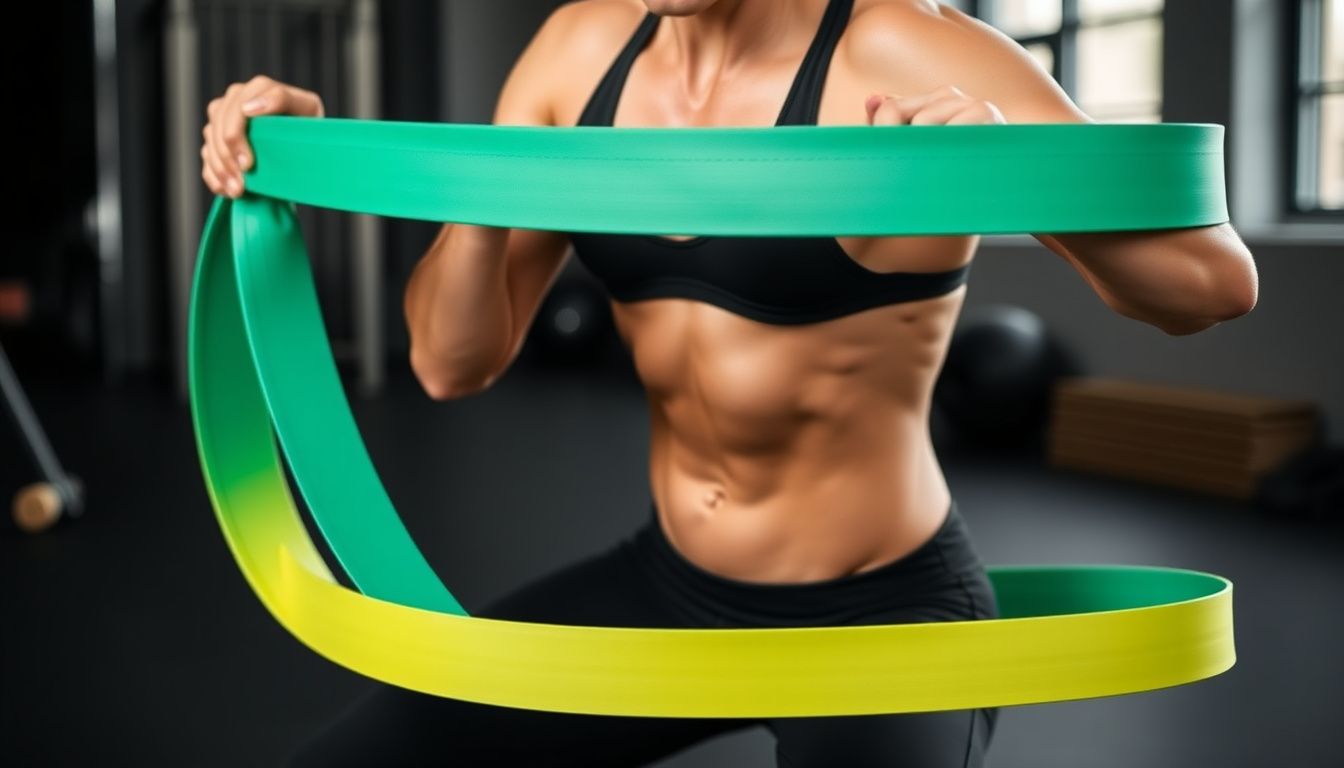
Advanced Strategies: How to Supercharge Your Resistance Band Muscle Growth
Once you’ve mastered the basics, there are several advanced strategies you can employ to ensure that resistance bands continue to build muscle effectively and challenge your physique. These techniques focus on increasing intensity, optimizing muscle engagement, and preventing plateaus.
One powerful technique is incorporating tempo training. By controlling the speed of your repetitions, especially slowing down the eccentric (lowering) phase, you increase time under tension, leading to greater muscle damage and subsequent growth. For example, a banded bicep curl with a 3-second lowering phase will be significantly more challenging than a quick, uncontrolled movement.
Unleashing the Full Potential: Dropsets, Supersets, and Isometric Holds
To truly push your muscles, consider these advanced techniques:
- Dropsets: Perform an exercise to failure with a heavy band, then immediately switch to a lighter band and continue to failure. This floods the muscle with blood and fatigues a wide range of muscle fibers.
- Supersets: Pair two exercises back-to-back with minimal rest in between. For instance, banded squats followed immediately by banded lunges. This increases workout density and metabolic stress, both contributors to hypertrophy.
- Isometric Holds: Hold a resistance band at its peak contraction point for 10-30 seconds. This static hold dramatically increases time under tension and can recruit stubborn muscle fibers. Try a banded row and hold the squeeze at the top.
- Partial Reps at Peak Contraction: After completing full range of motion reps, perform a few extra partial reps at the point where the band is most stretched, maximizing tension on the muscle.
These methods ensure that your workouts remain challenging and stimulating, continually prompting your muscles to adapt and grow. Remember, consistency and listening to your body are key to safely implementing these advanced strategies and continuing to build muscle with resistance bands.
Frequently Asked Questions
Do resistance bands build muscle as effectively as weights?
Yes, numerous studies indicate that resistance bands can build muscle and strength just as effectively as traditional free weights, provided the principles of progressive overload are applied. The key is to generate sufficient tension and challenge your muscles appropriately.
What type of resistance bands are best for muscle building?
Loop bands (also known as power bands) are generally best for building muscle due to their versatility and ability to provide significant resistance for compound and isolation exercises. They come in various thicknesses, allowing for easy progression.
How often should I train with resistance bands to build muscle?
For optimal muscle growth, aim for 3-4 full-body resistance band workouts per week, allowing for rest days in between. Alternatively, you can split your routine into upper and lower body days, training each muscle group twice a week.
Can resistance bands replace a gym membership for muscle building?
For many individuals, yes, resistance bands can effectively replace a gym membership for building and maintaining muscle. With a proper set of bands and a well-designed program, you can target all major muscle groups and achieve substantial gains from home.
Is it possible to bulk up significantly using only resistance bands?
While “bulking up” to an extreme degree like professional bodybuilders might be more challenging without very heavy free weights, resistance bands can certainly lead to significant muscle hypertrophy, increased strength, and a well-defined physique. Consistent progressive overload is the critical factor.
Do resistance bands help with muscle definition?
Absolutely. By building muscle mass and reducing body fat through proper diet and exercise, resistance bands contribute directly to improved muscle definition. The constant tension bands provide can also lead to a greater “pump” and vascularity during workouts.
Are resistance bands good for beginners looking to build muscle?
Resistance bands are excellent for beginners. They offer a safe way to learn proper form, build foundational strength, and gradually introduce resistance without the intimidation or high injury risk associated with heavy free weights. They provide a scalable entry point into strength training.
Final Thoughts on do resistance bands build muscle
The comprehensive exploration of “do resistance bands build muscle” unequivocally confirms their immense potential as a formidable tool for strength training and hypertrophy. We’ve seen how their unique variable resistance profile, combined with the principles of progressive overload, creates a powerful stimulus for muscle growth, rivaling that of traditional free weights. From enhancing muscle activation and stability to offering unparalleled portability, resistance bands provide a versatile and effective pathway to achieving your fitness goals, whether you’re a beginner or an experienced lifter.
By implementing the strategies discussed, from progressive overload techniques to advanced workout designs, you can unlock significant gains and transform your physique. Don’t underestimate the power of these elastic wonders; embrace them as a core component of your training regimen. Start incorporating resistance bands into your routine today and witness firsthand how they can elevate your strength, muscle mass, and overall fitness.