

If your abs routine is all crunches and hope, you already know the problem: your neck gets sore, your lower back complains, and your “core day” starts getting skipped. The right ab equipment doesn’t just add resistance—it locks you into cleaner reps so your midsection actually has to work.
Persona: The No-Excuses Home Gym Coach. Abs equipment matters because most people fail at core training for boring reasons: setup hassle, uncomfortable positions, and exercises that don’t scale. A good ab machine makes the hard part the workout—not the floor. It should guide your movement, protect knees and back, and give you clear progression so you can move from “I can’t feel my abs” to controlled, repeatable sets you can measure.
How we separated gimmicks from real core work
We evaluated these ab machines the way a busy home-gym household actually uses them: quick assembly, how stable the frame feels under shifting weight, and whether the track encourages a rounded, rib-to-hip crunch rather than yanking with the arms. We compared adjustment ranges (height/incline/resistance), padding comfort at the knees and elbows, noise during rolling, and storage footprint. We also checked the usefulness of the LCD counters for staying consistent across sessions.
Fitlaya Fitness Adjustable Foldable Ab Machine
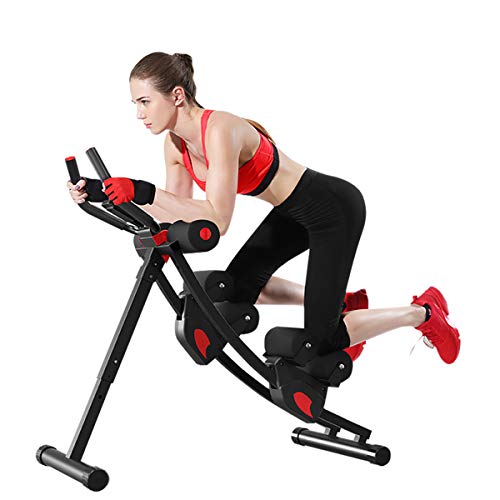
Some ab machines feel like toys the moment you put your knees down—this one doesn’t. The Fitlaya’s curved track with separated sliders gives it a “guided rail” feel that keeps your motion consistent, which is exactly what most home ab training lacks. First impressions lean sturdy: heavy-duty steel, foam-covered grips, and a proper knee cushion. The built-in LCD is a simple touch, but it helps keep reps honest when you’re tempted to quit early.
Pros
- Curved track helps keep crunch path consistent
- Four resistance levels scale with strength
- Steel frame feels stable under load
- Folds away without a storage headache
- LCD counter helps pace your sets
Cons
- Slider-style motion may feel unfamiliar initially
- LCD metrics are basic, not smart
In practice, the Fitlaya works best when you slow down and treat it like a controlled crunch, not a fast cardio rocker. The knee cushion and foam grips reduce the little distractions that ruin longer sets, and the separated sliders encourage even left-right pressure instead of twisting. Because it folds, it’s realistic for apartments. The resistance levels give you a progression path, so it doesn’t get stale after the first week.
Buy this if you want a sturdier, more “machine-like” ab trainer that pushes consistent form and offers real progression with multiple resistance levels. It’s a strong pick for people who hate floor crunches or feel them in the neck. Skip it if you only enjoy free-motion core work (planks, rollouts) and don’t want a guided track telling your body where to go.
MERACH Adjustable Ab Trainer Machine (Black)

Instead of trying to reinvent the crunch, MERACH leans into making it smoother and safer. The ergonomic arc track mimics a natural curl, and the triangular dual-track frame is the kind of detail that usually separates wobbly home gear from something you’ll trust at higher effort. At a glance, it’s built for regular use: commercial-grade steel, quiet rollers, and padding meant to keep knees and elbows from feeling beat up.
Pros
- Triangular dual-track reduces side-to-side wobble
- Ergonomic arc track feels more natural
- Silent rollers won’t annoy roommates
- Supports up to 330 lb
- Four height settings fit more bodies
Cons
- No incline adjustment for extra challenge
- Cardio claims depend on your effort
During longer sessions, the quiet glide matters more than people expect—no clacking track means you’re more likely to stick with it. The arc track encourages a smooth curl, which can help you avoid hinging at the hips and “cheating” the rep. Height adjustment makes it workable for different leg lengths, and the frame shape suggests better stability when you start pushing for higher rep counts or slower negatives.
This suits households that share equipment and need something stable, quiet, and easy to adjust between users. It’s also a solid choice if your knees or elbows get cranky on thin padding. Avoid it if you want lots of mechanical difficulty options—without incline changes, progression relies mainly on tempo, range, and volume.
RELIFE REBUILD YOUR LIFE Ab Workout Machine 440 LBS

If your main fear is buying an ab machine that flexes and creaks, RELIFE comes in with a bold answer: a reinforced steel frame rated up to 440 lbs. It also brings more tweakability than many budget ab trainers, with five height settings and two incline levels. The LCD monitor is simple but functional for tracking time and reps, and the thickened rollers with NBR foam feel aimed at durability, not just showroom comfort.
Pros
- High 440 lb capacity inspires confidence
- Incline plus height adjustments add progression
- Targets more than just abs
- NBR foam padding feels supportive
- LCD helps track reps and time
Cons
- Bigger frame may take more space
- Roller pressure can bother sensitive knees
With incline options, you can make the same movement noticeably harder without needing extra accessories—handy when your core adapts quickly. The thick rollers and foam padding should hold up to frequent sessions, though higher pressure points may still require a towel or extra pad if you’re sensitive. The sturdy build encourages slower, stricter reps, which is where ab machines tend to shine versus floor work.
Choose this one if you want stability first, adjustability second, and a machine that can handle heavier users without feeling sketchy. It’s also a good pick for people who like structured progression via incline changes. Pass if you’re tight on storage space or prefer ultra-soft knee support over firmer, longer-lasting rollers.
MERACH Adjustable Foldable Ab Trainer Machine

This foldable ab trainer is a space-conscious option for home users who want guided core work without floor crunches. The adjustable incline and height settings let you scale difficulty as strength improves, while knee and elbow padding reduces pressure that often limits consistency. It suits steady, moderate-volume sessions focused on rectus abdominis and hip-flexor control. The built-in counter is a simple pacing aid, not a coaching tool.
Pros
- Adjustable incline and height for progressive overload
- Knee and elbow padding improves comfort
- Foldable frame stores easily in small spaces
- Rollers feel smooth and relatively quiet
- LCD counter helps track reps and session time
Cons
- Limited for rotational oblique training
- Progress depends on consistent form and tempo
In daily use, it works best for controlled sets rather than rushing reps. The padding makes longer sessions more tolerable, especially for beginners who struggle with kneeling positions. Adjustments are useful for keeping the movement challenging as you adapt, but the stimulus is still mostly flexion-based. Use slow eccentrics and full range to avoid hip-flexor dominance. The counter is handy for consistency, but don’t rely on calorie estimates.
Buy this if you want a compact, low-noise ab machine for routine core training at home, especially if floor work bothers your neck or lower back. It’s a practical pick for beginners to intermediates who value comfort and simple progression. If your priority is oblique rotation, anti-rotation, or heavy resistance core work, pair it with bands or a cable alternative for better balance.
Auto-Rebound Ab Machine With Adjustable Resistance

This ab machine targets users who want a more assisted, repeatable sit-up pattern with adjustable resistance levels. The auto-rebound mechanism can reduce sticking points and make higher-rep core sessions more manageable, while included bands broaden exercise variety beyond abs. It’s positioned as a multi-move home station for core and light full-body work, emphasizing convenience and progression via quick resistance changes rather than complex setup or heavy loading.
Pros
- Four resistance levels for scalable difficulty
- Auto-rebound helps maintain smooth rep rhythm
- Bands add variety for upper and lower body
- Thick cushion reduces pressure during longer sets
- Steel frame offers stable feel under load
Cons
- Assisted rebound may reduce core demand if overused
- Not ideal for heavy strength-focused core training
For day-to-day training, it shines when you treat it like a high-quality rep machine: consistent tempo, moderate sets, and gradual resistance increases. The rebound can help you keep form when fatigue hits, but you’ll get better results by controlling the return instead of letting it snap you up. Bands are useful for warmups and accessory work, though tension may be limited. Stability feels solid, but surface grip matters.
Choose this if you want guided sit-up style training with easy resistance adjustments and some full-body versatility. It’s best for beginners and intermediates building core endurance and consistency, or anyone who benefits from an assisted pattern to keep sessions regular. If you already have strong core control and want heavier anti-extension or anti-rotation work, you may outgrow it quickly.
Frequently Asked Questions
What gym equipment is best for abs at home?
An adjustable ab trainer machine is the most versatile. It supports controlled crunch patterns, scales difficulty by incline or resistance, and reduces lower-back strain versus high-rep floor sit-ups.
Are ab machines better than doing planks and crunches?
They can be, if you need progression and consistency. Machines add repeatable resistance and range control, helping overload the abs safely. Bodyweight work still complements them for anti-rotation and stability.
What should I look for when buying an ab trainer machine?
Prioritize adjustability, smooth track motion, stable base, comfortable knee pads, folding storage, and a realistic weight rating. If included, resistance bands should have multiple levels and secure anchors.
Our Recommendation
Best overall: MERACH Ab Machine with ergonomic arc track, for smoother motion and scalable difficulty. Best budget: Fitlaya Fitness ab machine, delivering solid core training with fewer extras. Choose RELIFE if you want higher stated capacity and straightforward adjustability. Pick the pink MERACH for the same style with different color preference. If you want band-based rebound resistance, the automatic rebound model fits small spaces and lighter-to-moderate loading.