
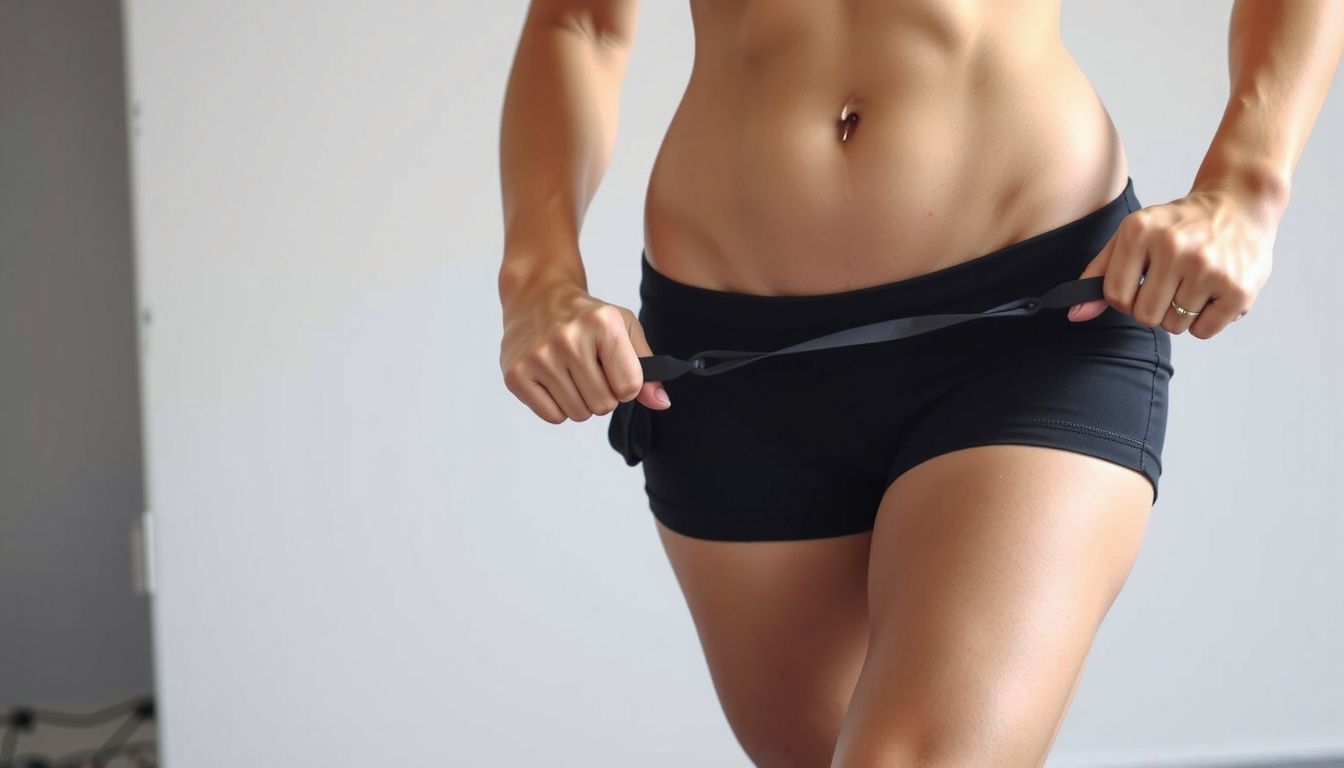
Are resistance bands good for glutes? If you want a stronger, rounder backside without living in the squat rack, they can be a surprisingly effective tool.
Most people struggle with glute training because the quads and lower back like to “steal” the work. Bands change the game by adding constant tension and making it easier to feel the glutes doing their job, especially during warm-ups, home workouts, or travel.
I’ve coached beginners who couldn’t feel a single rep of bodyweight squats, then lit up their glutes in minutes with a simple loop band. For example, I’ll often start with 2 sets of 15 banded lateral walks, then move into 12–15 banded glute bridges; the difference in activation is immediate.
Up next, I’ll break down what bands do well, where they fall short, and how to use them for real progress. If you’re ready to train smarter, grab a band and use this quick checklist:
- Choose the right tension (you should finish sets near fatigue, not flailing)
- Prioritize form (knees track over toes; ribs down; squeeze at the top)
- Progress weekly (more reps, thicker band, or slower tempo)
Are resistance bands good for glutes? My honest take
Now, let’s get real about are resistance bands good for glutes. Yes—when I use them with intent, they’re one of the most reliable tools for glute activation and growth, especially at home or in a busy gym. They’re not magic, but they’re far from “just warm-up gear.”
I’ve seen bands work best for people who struggle to feel their glutes during squats and deadlifts. Bands give you constant tension and instant feedback: if your knees cave or your hips shift, you’ll feel it. That makes technique cleaner, which is often the missing link for beginners.
That said, bands have limits. If you only do light band kickbacks forever, you’ll stall. I treat bands like a smart resistance option—perfect for high-quality reps, burn sets, and adding volume without joint stress.
- Best for: activation, pump work, high-rep hypertrophy, travel workouts
- Less ideal for: maximal strength, low-rep overload without heavier bands
- My rule: progress tension, reps, or control every 1–2 weeks
How bands actually grow glutes: tension, angles, and control
Bands grow glutes through three levers I focus on: tension, angles, and control. Unlike free weights, bands get harder as they stretch, so your glutes work hardest near peak contraction. That’s great for building the “squeeze” many lifters lack.
Angle matters because the glutes have different jobs. Hip extension (thrusting) targets the glute max, while hip abduction and external rotation hit the glute med/min for shape and stability. I rotate patterns across the week so I’m not hammering one line of pull.
Control is the multiplier. If you rush reps, the band snaps you through the easy range and your hips do the work. I use slower eccentrics and pauses to keep tension where it belongs.
Practical example: I’ll run 3 rounds of banded hip thrusts (15 reps + 2-second top pause), then lateral band walks (12 steps each way), then standing kickbacks (12/side). I increase band tension once I can keep perfect pelvis control.
- Slow down the lowering phase (2–3 seconds)
- Pause at peak contraction (1–2 seconds)
- Keep ribs down, pelvis level, knees tracking out
Choosing the right resistance bands for glute training
Now that you know how bands can challenge the glutes, the next step is picking the right tool for the job. The band you choose changes the feel of every rep, so I treat selection like I would loading plates.
For most beginners, I recommend starting with loop (mini) bands for abduction work and a long resistance band for hinge and squat patterns. Fabric loops tend to stay put and feel smoother on skin; latex loops usually give more stretch and a sharper “snap” at end range.

Here’s what I look for when I’m buying bands for glute training:
- Width: wider loops bite less and roll less on the legs.
- Resistance range: at least 3 levels (light/medium/heavy) so you can progress.
- Stitching or layered latex: avoids early tearing and uneven tension.
- Fit: a loop that’s too small forces knee collapse; too big won’t load the glutes.
Practical example: if your banded hip thrusts feel easy at the top but sloppy at the bottom, swap to a heavier loop or shorten the band. If your knees cave in, go lighter and focus on control first.
My best resistance band glute exercises (and how I cue them)
Look, the best band exercises are the ones you can feel in the glutes without your lower back taking over. I prioritize movements that keep tension where you want it and make form mistakes obvious.
My go-to lineup:
- Banded glute bridge/hip thrust: “Ribs down, chin tucked, push knees out, pause 2 seconds at the top.”
- Lateral band walk: “Soft knees, toes forward, step wide, don’t sway your torso.”
- Standing kickback (band anchored low): “Hinge slightly, lock your ribs, drive heel back, stop before your back arches.”
- Seated/lying abduction: “Lead with the knee, keep feet quiet, slow return.”
Practical example: when I coach a beginner on lateral walks, I’ll have them do 8 steps each way with a light band, then immediately hold an abduction “open” position for 15 seconds. If they feel it in the outer glute, we keep the load; if it hits the quads, I cue smaller steps and a deeper hip hinge.
If you’re still wondering are resistance bands good for glutes, these are the exact drills I use to build control, then intensity.
My simple weekly band-only glute plan for visible progress
Now that you’ve got the right bands and a solid exercise menu, you need a repeatable plan. I like a 3-day band-only split because it hits the glutes often without frying your hips or low back. Keep 1 day “heavy” (thicker band), 1 day “volume,” and 1 day “pump + control.”
Here’s the structure I use, aiming for 8–15 hard reps and 1–3 reps in reserve on most sets:
- Day 1 (Strength bias): band hip thrust 4×8–12, band RDL 3×10–12, lateral walk 3×12–20/side
- Day 2 (Volume bias): Bulgarian split squat 3×10–15/side, frog pump 3×15–25, kickback 3×12–20/side
- Day 3 (Pump + control): glute bridge 3×15–25 (2-sec squeeze), abduction 3×20–30, step-out squat 2×12–15
Practical example: if you hit 15 clean hip-thrust reps for all sets on Week 1, I’ll either move up a band or add a 2-second pause at the top in Week 2. Progress should be boring—and obvious.
Common mistakes I made (and how to fix them fast)
Look, bands are unforgiving. When I first started, I “felt” the burn but didn’t build much because my setup and execution were sloppy. Fixing a few details made my glute sessions instantly more productive.
These are the errors I see most (and I’ve done every one):
- Letting tension disappear: I used to relax at the bottom. Fix: keep the band pre-stretched and control the eccentric for 2–3 seconds.
- Rushing reps: Fast reps turned into hip flexor work. Fix: add a 1–2 second squeeze at peak contraction.
- Knees caving in: My glute med quit early. Fix: “spread the floor” and keep knees tracking over toes.
- Wrong band placement: Too low/high changed the line of pull. Fix: for thrusts/bridges, place above knees; for kickbacks, anchor at ankle.
Practical example: during band hip thrusts, if my quads take over, I shorten my stance slightly and tuck my ribs down. The glutes light up immediately, and my lower back stops complaining.
How I track progress and when I add weights or harder bands
Now that my plan is set, I track progress like a coach, not a hype video. I log are resistance bands good for glutes results by watching performance trends, not just soreness.

Each workout, I record three things: the band used, the rep range hit, and a quick “quality score” (1–5) for glute feel and control. If my form breaks, I don’t count it as progress.
- Reps: I add difficulty when I can hit the top of my target reps on every set.
- Tempo: If I can keep a 2–3 second lowering phase without losing tension, I’m ready.
- Range: When I can reach full hip extension with no pelvis tuck or knee cave, I progress.
Practical example: on band hip thrusts, I might start with 3×10–12. Once I can do 3×12 with the same band and a clean 2-second pause at the top, I either move to the next band or add a dumbbell on my lap while keeping the band for outward knee pressure.
I progress one variable at a time, then reassess weekly. That keeps the stimulus high and the joints happy.
Before you overthink it, are resistance bands good for glutes? Yes—when you use them with intent. Here are the quick clarifiers I get asked most, plus my straight verdict on where bands fit in a results-driven glute routine.
People Also Ask
Can resistance bands actually build glutes, or are they just for “activation”?
They can build glutes if you train close to fatigue and progress the challenge. Pick a band that makes the last 5 reps slow and shaky, keep tension constant, and aim for 10–20 hard reps per set. If it feels easy, it’s not a growth stimulus.
Are resistance bands good for glutes if I have knee pain during squats?
Often, yes—because you can bias the hips without deep knee bend. Try hip hinges, bridges, and kickback patterns, and keep your shin more vertical. If pain persists or sharpens, stop and get assessed; don’t “push through” joint pain.
How long does it take to see glute results using bands?
Most beginners notice better shape and firmness in 4–8 weeks if they train consistently and eat enough protein. Track two things: photos (same lighting) and performance (more reps or thicker band). If both stall for 2–3 weeks, adjust.
What’s the best resistance band type for glutes: loop bands or long bands?
Loop bands shine for abduction and short-range tension; long bands are better for hinges and hip extension with more range. If you’re buying one, I’d start with a durable fabric loop set. If you want versatility, add a long band with handles.
The Bottom Line
My verdict: resistance bands are absolutely good for glutes—especially for beginners, home training, travel, and anyone who needs joint-friendly loading. They’re not “inferior.” They’re a tool, and used hard, they deliver real hypertrophy and shape.
The key is matching the band to the job and pushing sets close to failure with clean form. Bands reward control: steady tension, full intent, and no rushing. If you treat band work like cardio, you’ll get cardio-level results.
If you treat it like strength training, your glutes respond.
Here’s a real-world example I use when I’m on the road: I pack one medium and one heavy loop band. In a hotel room, I’ll run a 15-minute session—two hard rounds, minimal rest—then walk out with a glute pump that lasts for hours. That consistency keeps momentum when life gets busy.
If you want the simplest next step, do this:
- Choose one band that makes you work in the 10–20 rep range.
- Train 2–3 days/week and keep at least one rest day between sessions.
- Progress weekly by adding reps, slowing tempo, or moving up a band.
60-Second Recap
- Bands can build glutes when sets are taken near fatigue.
- They’re often a smart option if deep squats irritate knees.
- Expect visible change in about 4–8 weeks with consistency.
- Loop bands = great for abduction; long bands = great for hinges/extension.
- Train them like strength work, not “warm-up fluff.”
Related read: Which Resistance Band to Buy: My Simple Matching Guide