

A “full-body workout machine” can either save your home gym… or quietly steal your space and motivation. One wobbly frame, one sticky pulley, or one tiny weight stack and you’ll start skipping sessions. The good news: a few spec tells and build choices separate the keepers from the clutter.
Persona: The Garage-Gym Realist. Home workout machines matter because consistency beats perfect programming. When your equipment is safe, smooth, and ready in seconds, you train more often—especially on busy weeks. The tricky part is matching the machine to your room, strength level, and patience for setup. In this pass, we focus on practical signals: frame material, pulley feel, weight-stack usefulness, and how each option fits real homes, not showroom floors.
How we sorted the “actually usable” from the “looks good online”
We evaluated these machines like a small home-gym team: we compared footprint versus exercise coverage, checked stack size and adjustability for progressive overload, and looked closely at frame specs (steel type, tube size, thickness) for stability. We also judged pulley and cable details (bearing style, wire construction) because that’s where cheap systems feel jerky. Finally, we considered assembly realism, seat/pad adjustability, and who will outgrow the resistance first.
GarveeLife Home Gym 150 lb Stack Station

If you want the “one corner does everything” vibe, this GarveeLife station leans into classic selectorized training: press, fly, pulldown, row, plus a preacher pad and leg developer. The 150 lb stack is a meaningful step up from entry-level stacks, and the listed Q235 steel frame with chrome-treated surfaces suggests it’s built with sweaty garages in mind. First impression: a value-focused all-in-one that prioritizes variety over luxury touches.
Pros
- 150 lb stack suits steady strength progression
- Preacher pad helps strict curls and elbow control
- Multiple adjustments help different body sizes
- PU pulleys with bearings feel smoother
- Leg developer adds quad-focused work
- Chrome-treated steel helps fight rust
Cons
- Assembly can be time-consuming and fussy
- 150 lb may cap stronger lifters
In daily use, the big win is exercise flow: you can move from pulldowns to rows to curls without changing plates. The 2 x 2.75 in frame spec and 1.5 mm thickness should translate to decent rigidity if everything is tightened correctly. PU pulleys and 7×19 wire cable typically feel less “grindy” than bare plastic wheels. Expect the leg developer to be great for extensions, but less ideal for heavy, knee-sensitive users.
Buy this if you want a traditional home-gym station with enough resistance to last most beginners and intermediates, plus a preacher curl setup that many combos skip. It’s also a good pick if you share equipment with family thanks to the adjustability. Skip it if you already pull serious weight on rows/pulldowns and know you’ll blow past 150 lb quickly, or if you hate multi-step assembly projects.
Fitvids Home Gym 160 lb Stack w/ Leg Press
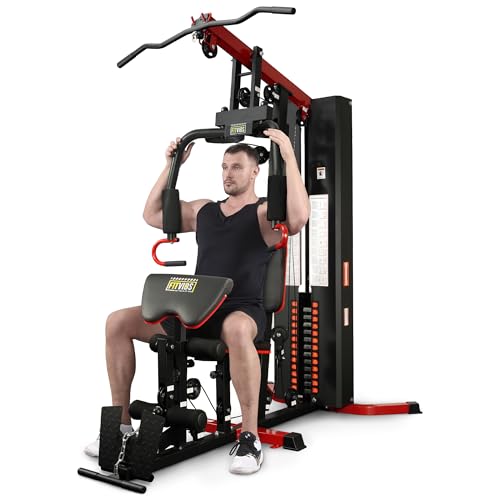
Some all-in-one gyms feel like a compromise the second you sit down; this Fitvids model aims to feel more “club machine” with a 160 lb vinyl stack, a high/low pulley setup, and a dedicated leg press function. The published structure stats—500 lb user capacity and 1000 lb total weight limit—signal a sturdier build than many budget combos. It reads like a compact, heavy-duty station for people who train consistently, not occasionally.
Pros
- 160 lb stack offers more runway than basics
- Leg press expands lower-body training options
- 15 pulleys support smoother cable travel
- Compact 42x68x78 in footprint
- High/low pulleys cover most movements
- High weight ratings suggest solid stability
Cons
- Vinyl stack feel differs from iron plates
- Large footprint still needs a dedicated corner
The advantage here is movement variety without awkward workarounds: lat pulldowns, rows, presses, and leg work live on one frame. With 15 pulleys, the cable path can stay more consistent through different stations, which usually reduces tugging and uneven tension. At 42 x 68 x 78 in, it’s “apartment possible” only if you plan the room; you’ll want clearance for the press and pulldown arcs. Expect better confidence under load than lighter combo units.
Choose this if you want a single station that feels stable, includes a true leg press option, and gives you a bit more stack than the typical 100–150 lb setups. It’s a smart fit for garages, basements, and shared spaces where you need one machine to cover most strength work. Avoid it if you prefer free weights, or if your training already demands heavier cable stacks for rows and pulldowns.
GarveeLife Home Gym 100 lb Stack System

This GarveeLife 100 lb stack system is the “get the basics done without wrecking the budget” option in the lineup. It keeps the familiar all-in-one recipe—chest press, butterfly, lat pulldown, low row, leg extension—while leaning on Q235 steel, chrome plating, and a PU pulley system to keep the feel decent. The dual-function arm press is a nice touch for small spaces, since it covers two chest patterns without extra attachments.
Pros
- Lower price than heavier stack stations
- Dual press switches between chest and fly
- PU pulleys help reduce cable chatter
- Q235 steel frame targets everyday durability
- Covers pulldown, row, press, extensions
- Beginner-friendly resistance for form practice
Cons
- 100 lb stack limits long-term progression
- May feel small for tall users
For real home workouts, this machine works best as a consistency builder: quick selector pin changes, repeatable movement paths, and enough positions to hit major muscle groups. The 2 x 2 in frame and 1.5 mm steel thickness should be stable for moderate loads, though heavier users may notice more flex than premium rigs. The chest press/fly station can be a shoulder-saver if you keep range controlled. Plan for a careful assembly and periodic bolt checks.
Buy this if you’re starting strength training, returning after a break, or want a compact “one machine routine” for general fitness. It also fits households where multiple people need manageable resistance. Pass if you already train seriously on cables or expect fast strength gains; a 100 lb stack can become a ceiling, especially for rows, pulldowns, and leg-focused movements.
YPOO Magnetic Folding Rowing Machine

This compact magnetic rower is a practical full-body cardio machine for small home spaces. The 16 resistance levels let you scale from steady aerobic sessions to harder intervals without loud fan noise. A higher stated weight capacity and long slide rail make it more accommodating than many budget rowers. App support and an onboard display help with pacing and consistency, while foldable storage targets apartment users who need equipment that disappears between workouts.
Pros
- Quiet magnetic resistance suits shared living spaces
- Foldable footprint stores easily in tight rooms
- Long rail fits many heights comfortably
- Smooth stroke supports steady cardio pacing
- App support adds guided workouts and tracking
Cons
- Apps may require setup and device pairing
- Magnetic feel less sprint-like than air rowers
In daily use, the stroke feels smooth and controlled, making it easy to maintain consistent cadence for zone training. Resistance changes are simple, so you can alternate endurance rows with short intervals without breaking rhythm. The machine is quiet enough for early sessions, and the compact storage helps keep the space functional. The display covers the basics, while app workouts can add structure when motivation drops.
Best for home users who want a single machine for cardio plus full-body engagement, especially in apartments or shared spaces. It fits beginners through intermediate trainees who value quiet operation and easy storage over race-style sprint feel. If you prefer guided sessions, the app compatibility is useful. For the price, it offers strong everyday usability, provided you are comfortable with app pairing.
MARCHMARS Wall-Mount Cable Trainer

This wall-mounted cable system is a space-efficient strength trainer for full-body work when floor space is limited. It emphasizes versatility over maximum loading, offering multiple movement patterns for pushing, pulling, core work, and light leg training. Adjustable resistance levels make it approachable for beginners, rehab-focused users, or those building consistency. The pulley motion aims to stay smooth and controlled, which supports better form and joint-friendly training at home.
Pros
- Zero floor footprint with wall-mount design
- Supports many exercises for full-body training
- Smooth pulley action helps controlled repetitions
- Adjustable resistance suits beginners and rehab
- Quick-detach bar improves portability and storage
Cons
- Resistance range may limit heavy strength progression
- Requires solid wall mounting for safe use
For daily sessions, it works well for high-rep strength, mobility, and form-focused training. Transitions between rows, presses, curls, and core moves are quick, so circuits feel efficient. The resistance steps help you match fatigue across different exercises, though stronger lifters may outgrow the top setting for big pulls and presses. The smooth cable feel encourages slower tempo work, which can improve control and reduce joint irritation.
Ideal for small homes that need strength training without a bulky rack or bench setup. Great for beginners, general fitness, toning, and rehab-style routines where controlled resistance matters. It is also useful for travelers or outdoor training if portability is important. Value is strongest when you prioritize exercise variety and space savings over heavy progressive overload.
Frequently Asked Questions
Should I choose a weight-stack home gym or a cable trainer?
Weight stacks feel smoother and simplify progressive overload. Cable trainers save space and improve movement variety, but rely on bands or plates. Choose stacks for convenience, cables for compact versatility.
What weight stack is enough for a full-body home machine?
For beginners, 100 lbs covers most movements with good form. Intermediate users benefit from 150–160 lbs, especially for rows, pulldowns, and leg work. Strong lifters may outgrow stacks quickly.
Is a rowing machine a true full-body workout machine?
Yes for cardio plus posterior-chain endurance, using legs, back, and arms together. It is not ideal for heavy strength or muscle isolation. Pair it with basic resistance work for balance.
Verdict
Best overall: Fitvids Multifunctional Home Gym with 160 lbs stack for the strongest all-in-one strength coverage and leg press capability. Best budget: GarveeLife Home Gym System with 100 lbs stack for solid full-body basics at lower cost. Choose GarveeLife 150 lbs if you want a stack upgrade plus preacher curl and leg developer. Pick YPOO Rowing Machine for compact cardio-focused full-body training. Choose MARCHMARS Cable Machine when wall-mounted space saving matters most.