

Most “full-body” home setups fall apart when you try to train legs, back, and pressing in one session. You either run out of resistance, fight wobbly frames, or spend half your workout swapping plates. A selectorized home gym can fix that—if the pulley feel, adjustability, and station layout are actually usable day to day.
I review home gym gear with a simple bias: the best machine is the one you’ll use on a tired weekday, not the one that looks impressive on a product page. Full-body machines matter because they remove friction—no plate math, no cable re-rigging every set, and fewer excuses when space is tight. For most people training at home, a good multi-station unit can cover the big patterns: push, pull, hinge-ish, squat-ish, plus arms and core—without turning your garage into a warehouse.
How we checked the “one-machine” promise
We evaluated each station the way real households train: quick weight changes, messy supersets, and repeated transitions between push and pull work. Our team focused on cable smoothness (pulley count, binding, handle path), frame stability under off-center pulls, usable adjustment ranges (seat height, arm positions, leg developer fit), and how intuitive the station layout feels when you’re moving fast. We also weighed space footprint versus exercise coverage, because a machine that blocks the room rarely survives long-term.
Sportsroyals Home Gym 150LBS Weight Stack

If you want a classic “everything in one tower” machine without it swallowing the whole room, the Sportsroyals unit makes a strong first case. The headline is 35+ exercise functions paired with a 150 lb selectorized stack, so you can move from lat pulldowns to presses without plate swapping. What stood out to our team is the stability-first approach: a wide H-base, non-slip pads, and commercial-style steel sizing that reads more serious than many budget stations.
Pros
- 150 lb stack keeps workouts moving
- Wide H-base feels steadier during rows
- Seat and arms adjust for fit
- Compact footprint suits tight spaces
- Pulley action stays smooth under load
Cons
- 150 lb may cap strong lifters
- Assembly can take a while
In a full-body session, the Sportsroyals layout works best when you run it like a circuit machine: pulldown to chest press to low row, then finish with leg extension and curls. The compact 75.2 x 51.5 inch footprint helps in garages and basements, but you’ll still want clearance for arm movement and cable travel. The adjustable butterfly arms and seat positions help dial in pressing angles so you’re not forcing awkward shoulder paths.
Buy this if you want one dependable station for balanced training and you value stability over flashy extras. It’s a practical pick for beginners through solid intermediates who want consistent resistance and quick transitions. Skip it if you already outgrow a 150 lb stack on pulldowns or rows, or if you prefer free-weight movement patterns over guided stations.
Mikolo Home Gym 150LBS Weight Stack Station

Some home gyms feel like a collection of random attachments; the Mikolo reads more like a planned workstation. The spec that matters is not just the 150 lb stack—it’s the “over 90” exercise claim paired with high, mid, and low pulley options. Our first impression was that it aims at the person who likes variety: pec fly, pulldown, rows, leg work, plus core training, without constantly reconfiguring the machine into a different shape.
Pros
- Three pulley heights expand exercise variety
- 150 lb stack suits most households
- Preacher and leg press attachments included
- Bearing cable bar eases wrist strain
- Steel sheet guards add safety
Cons
- Large exercise list needs learning time
- May feel bulky in small rooms
In practice, the Mikolo shines when you program it like a “body-part split” machine: back day on pulldown and rows, then push day with chest press and pec fly, then leg extension/press work. The extra attachment approach is useful, but it also means you’ll spend a few sessions finding your preferred setup and handle choices. The guarded stack and sturdy steel frame help it feel less sketchy when you pull hard on mid-row patterns.
This fits the home trainer who gets bored easily and wants many cable angles without buying separate towers. It’s also a good match for families sharing one unit, since different users can lean into different stations. Avoid it if you hate fiddling with attachments or you need the smallest possible footprint—variety usually costs a bit of space and setup patience.
SincMill SCM-1148L&5003 148LB Home Gym

The SincMill pitch is less about fancy station count and more about reliability: thick steel, guarded frame, and a brand that’s been making fitness equipment for a long time. That tone matters if you’ve ever dealt with a wobbly home gym that starts squeaking after a month. Even though the listed features are more “build and support” than “exercise menu,” our team treated that as a signal: this machine is trying to win on durability, not gimmicks.
Pros
- Thick steel frame feels confidence-inspiring
- Weight guards add a safer feel
- Support promise helps long-term ownership
- Install guidance reduces setup headaches
- 148 lb stack covers general strength
Cons
- Less detail on exercise stations
- 148 lb may limit advanced pulls
For day-to-day training, the SincMill experience depends on how well its station layout matches your routine, but the underlying theme is sturdiness. Thick steel and guarded components typically translate into less rattle during cable work and fewer “loose bolt” surprises after repeated sessions. If you’re doing steady, progressive workouts—rows, pulldowns, presses, plus accessory arm and core work—the 148 lb stack gives enough runway for most users before you hit a strength ceiling.
Choose this one if your top priority is a durable, no-drama home gym that you can keep using without constant tinkering. It’s a sensible pick for beginners and intermediates who want consistent training and value responsive support. Pass if you want clearly spelled-out station features and attachments up front, or if you already need heavier resistance for back and leg work.
GOIMU M1 PRO Home Gym Station 140 lb Stack

GOIMU M1 PRO targets space-conscious lifters who want a selectorized, cable-based station that covers most staple strength patterns in one footprint. The 140 lb weight stack suits beginners through solid intermediates, especially for controlled hypertrophy work. Its adjustable seat and multi-station layout help you move between pushes, pulls, and leg accessories without constant re-rigging. Best used as a primary home machine when you value convenience over maximal loading.
Pros
- Selectorized stack enables fast, consistent resistance changes
- Pulley motion supports smooth, joint-friendly reps
- Multi-station layout covers push, pull, and leg accessories
- Adjustable seat improves fit across common movement patterns
- Stable base reduces rocking during heavier sets
Cons
- 140 lb stack may cap stronger users on compound pulls
- Large frame needs dedicated floor space
In daily use, the quick pin changes keep workouts moving and make supersets realistic. Cables feel most effective for lat pulldowns, rows, flys, curls, and triceps work, where consistent tension matters. Leg extensions and similar accessories are useful for volume, though not a squat replacement. Expect best results with moderate reps and controlled tempo; heavier, low-rep strength work will hit the stack limit sooner.
Buy this if you want an all-in-one cable station for full-body training in limited space, and your priority is exercise variety with minimal setup friction. It fits beginners and intermediates building muscle through consistent volume. If you already pull heavy or want barbell-level leg training, you may outgrow the 140 lb stack. Value is strongest for households sharing one machine.
Fitvids Home Gym 160 lb Stack with Leg Press
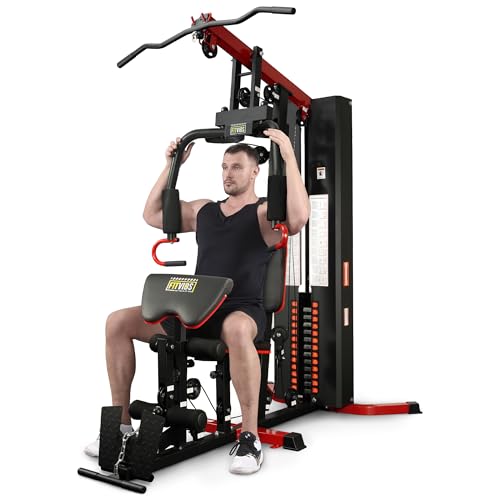
Fitvids positions this as a compact, full-body weight machine with a heavier 160 lb stack and a broader station mix, including a leg press option. It suits users who want more headroom than typical entry machines while keeping a cable-driven, guided feel. The pulley count and high/low routing support common back, arm, and core work with smoother transitions. It’s a practical centerpiece for general strength training without assembling multiple separate stations.
Pros
- 160 lb stack offers more progression headroom
- High and low pulleys cover most cable staples
- Leg press station adds lower-body training variety
- Sturdy steel frame feels stable under steady tempo
- Compact footprint suits apartments and garages
Cons
- Guided paths limit natural barbell-style movement patterns
- Assembly can be time-consuming and detail-sensitive
For day-to-day training, the machine works best when you plan sessions around cable staples: pulldowns, rows, press variations, curls, and triceps. The leg press is useful for quad-focused volume, especially when you want a back-friendly option, though it won’t mimic free-weight squats. The extra stack weight helps on pulls and presses, but advanced lifters may still need slower tempo or unilateral work to stay challenged.
Choose this if you want a single station that supports consistent full-body routines, with slightly more resistance range and a leg press feature. It’s a good fit for beginners through intermediates prioritizing convenience, repeatability, and guided mechanics. If your goal is maximal strength with free-weight carryover, you’ll likely prefer a rack and plates. Overall value is strong when space and simplicity matter.
Frequently Asked Questions
What weight stack is enough for a full-body home gym?
For most beginners and intermediates, 140–160 lb covers presses, rows, pulldowns, and leg work. Stronger lifters may outgrow stacks on heavy pulls and presses, and should prioritize smooth pulleys and upgrade paths.
Which features matter most for full-body training?
Prioritize pulley smoothness, exercise range, seat and backrest adjustability, and stable frame footprint. A leg press or low row increases lower-body and posterior-chain options, improving full-body coverage without extra equipment.
How do I choose between these all-in-one workout stations?
Choose Fitvids for the highest stack and leg press. Pick Sportsroyals or Mikolo for balanced value and full-body variety. GOIMU suits smaller spaces with adjustability. SincMill works if you want a straightforward, basic multi-gym.
Verdict: Best Full-Body Home Gym Pick
Best overall: Fitvids Multifunctional Home Gym (160 lb stack, leg press, broad exercise coverage). Best budget: Sportsroyals Home Gym (strong value, solid full-body basics). Mikolo is a close value alternative with similar versatility. GOIMU fits users needing more seat adjustment in tighter spaces. SincMill is best for simple, no-frills training when expectations are modest.