
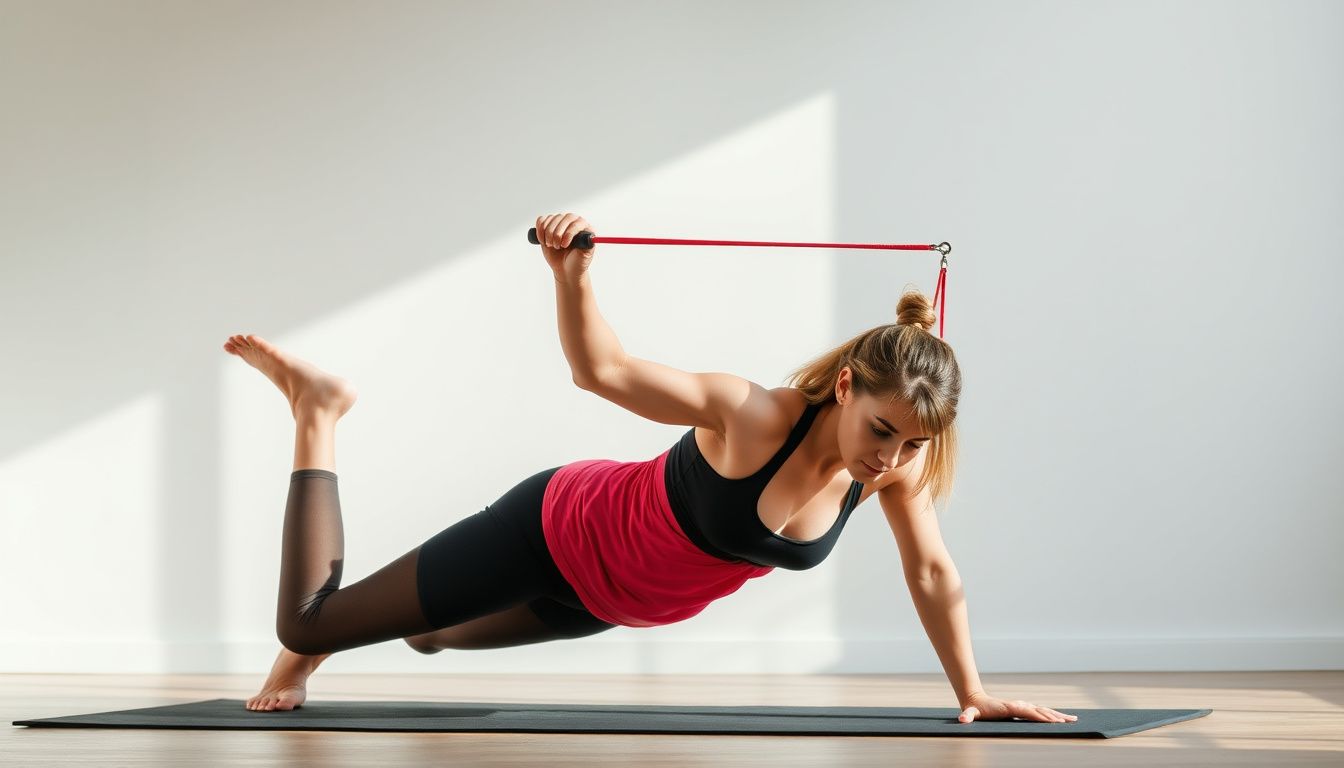
Absolutely, resistance bands work incredibly well for a wide array of fitness goals, providing a highly effective and versatile tool for strength training, muscle building, rehabilitation, and overall physical conditioning.
Resistance bands have transitioned from niche fitness accessories to mainstream workout essentials, prompting many to ask: do resistance bands work as effectively as traditional weights? The unequivocal answer is a resounding yes. These seemingly simple elastic tools leverage the principle of variable resistance, offering a unique stimulus to your muscles that can lead to significant gains in strength, endurance, and flexibility. Their portability and adaptability make them an excellent choice for home workouts, travel, or supplementing gym routines, proving their worth in diverse training environments.
Throughout this comprehensive guide, we’ll delve deep into the mechanics of how resistance bands function, explore the scientific backing behind their efficacy, and uncover their myriad benefits for different fitness levels and objectives. You’ll learn how to integrate them effectively into your regimen, understand the critical differences between bands and free weights, and discover practical tips to maximize your results. Prepare to unlock the full potential of these powerful, often underestimated, fitness allies.
The Undeniable Power: Why Do Resistance Bands Work So Effectively?
The efficacy of resistance bands isn’t just anecdotal; it’s rooted in fundamental principles of exercise physiology. Unlike free weights, which provide constant resistance throughout a movement, bands offer variable resistance. This means the tension increases as the band stretches, reaching its peak at the point of maximum muscle contraction. This unique characteristic is a primary reason why resistance bands work so powerfully, challenging your muscles in ways traditional weights cannot.
Understanding Variable Resistance and Peak Contraction
Variable resistance is a game-changer for muscle engagement. When you perform an exercise with a resistance band, the resistance is lowest at the start of the movement and progressively increases as you extend or contract. For example, during a bicep curl, the band provides less resistance when your arm is fully extended and ramps up as you pull it towards your shoulder. This forces your muscles to work harder through the entire range of motion, particularly at the strongest point of the lift (peak contraction), leading to greater muscle activation and improved strength gains.
Engaging More Muscle Fibers for Superior Growth
The constant tension provided by resistance bands keeps your muscles under load for the entire duration of an exercise. This sustained engagement can activate a higher number of muscle fibers, including those often missed by traditional weight training. By challenging stabilizing muscles and primary movers simultaneously, bands contribute to more comprehensive muscle development and enhanced proprioception. This holistic approach to muscle recruitment helps explain why do resistance bands work so well for building both size and functional strength.
The Science Behind Band Resistance
Scientific studies have consistently demonstrated the effectiveness of resistance band training. Research published in the *Journal of Strength and Conditioning Research*, for instance, has shown that resistance band exercises can produce similar levels of muscle activation and strength gains as free weights, especially when proper progressive overload is applied. Moreover, the elastic nature of bands can be particularly beneficial for explosive movements, as they allow for acceleration throughout the range of motion, improving power output. This robust evidence clarifies that, yes, resistance bands work as a legitimate and highly effective training modality.
Beyond the Gym: How Resistance Bands Work for Diverse Fitness Goals
One of the most compelling aspects of resistance bands is their incredible versatility, making them suitable for virtually any fitness objective. Whether you’re aiming to build serious muscle, improve flexibility, or recover from an injury, resistance bands provide an adaptable solution. Their ability to target specific muscle groups and accommodate different resistance levels ensures that everyone, from beginners to advanced athletes, can benefit.
Building Muscle and Strength with Bands
Many wonder, “can resistance bands really build muscle?” The answer is a definitive yes. By providing sufficient resistance to challenge your muscles, bands facilitate muscle hypertrophy (growth) and strength development. Exercises like squats, lunges, chest presses, and rows can be performed with varying band strengths to simulate heavy lifting. The key is to select bands that allow you to complete 8-12 repetitions to failure, mimicking the rep ranges typically used for muscle building. Consistent progressive overload, by using stronger bands or increasing reps/sets, will continue to stimulate growth.
Enhancing Flexibility and Mobility
Resistance bands aren’t just for strength; they are also fantastic tools for improving flexibility and range of motion. Gentle resistance can assist in deeper stretches, helping to lengthen muscles and increase joint mobility. For example, using a light band to gently pull a leg into a deeper hamstring stretch can be incredibly effective. Moreover, dynamic stretches performed with bands can warm up muscles more effectively, preparing your body for more intense workouts and reducing injury risk.
Injury Rehabilitation and Prevention
For individuals recovering from injuries, or those looking to prevent them, understanding how do resistance bands work is crucial. Their low-impact nature and ability to provide controlled, progressive resistance make them ideal for physical therapy. They allow for targeted strengthening of weakened muscles and stabilization of joints without the compressive forces associated with free weights. Therapists often prescribe band exercises to rebuild strength around knees, shoulders, and hips, guiding patients through safe and effective recovery protocols.
Cardio and Endurance Training
While primarily known for strength, resistance bands can also elevate your cardiovascular fitness and muscular endurance. Incorporating bands into high-repetition, circuit-style training can significantly increase your heart rate and challenge your muscles to sustain effort over longer periods. Exercises like banded jumping jacks, mountain climbers, or high knees can transform a strength workout into a full-body cardio session, proving their multifaceted utility.
Maximizing Your Gains: Practical Tips for Effective Resistance Band Workouts
To truly harness the power of resistance bands and understand how do resistance bands work best for you, it’s essential to apply smart training principles. Simply stretching a band won’t cut it; strategic planning and execution are key to achieving optimal results. These practical tips will help you elevate your resistance band training to the next level.
Choosing the Right Resistance Levels
Resistance bands come in a spectrum of resistance levels, typically indicated by color. Selecting the appropriate band is crucial for effective training. A band that’s too light won’t provide enough challenge for muscle growth, while one that’s too heavy might compromise your form or lead to injury. Start with a moderate resistance that allows you to complete 10-15 repetitions with good form, feeling a significant challenge by the last few reps. As you get stronger, progress to thicker, higher-resistance bands or combine multiple bands for increased tension.
Mastering Proper Form
Just like with free weights, proper form is paramount when using resistance bands. Incorrect technique can not only reduce the effectiveness of the exercise but also increase the risk of injury. Focus on slow, controlled movements, paying close attention to muscle contraction and extension. Avoid using momentum to complete reps; instead, let the band’s resistance dictate the pace. Watching instructional videos or consulting a fitness professional can help you refine your technique.
Implementing Progressive Overload
The principle of progressive overload is fundamental to all strength training, and resistance band workouts are no exception. To continue seeing results, you must consistently challenge your muscles more than they are accustomed to. This can be achieved in several ways with bands:
- Increase band strength: Move to a heavier resistance band.
- Increase repetitions or sets: Do more reps or add another set to your routine.
- Decrease rest time: Shorten the breaks between sets to increase intensity.
- Increase time under tension: Slow down the movement to keep muscles engaged longer.
- Combine bands: Use two bands simultaneously for a greater challenge.
- Change exercise variations: Opt for more challenging versions of exercises.
This systematic approach ensures that do resistance bands work continuously to stimulate adaptation and growth.
Incorporating Bands into Existing Routines
Resistance bands can be a standalone workout solution or a powerful complement to your existing fitness regimen.
| Aspect | Resistance Bands | Free Weights (Dumbbells/Barbells) |
|---|---|---|
| Resistance Type | Variable (increases as stretched) | Constant (gravity-dependent) |
| Joint Stress | Lower impact, often more joint-friendly | Higher impact, can be taxing on joints |
| Portability | Extremely portable, lightweight, travel-friendly | Heavy, bulky, requires dedicated space |
| Muscle Activation | Excellent for stabilizers, consistent tension | Great for primary movers, consistent load |
| Cost | Very affordable, low initial investment | Can be expensive, especially for a full set |
You can use them to:
- Warm-up: Light bands are perfect for activating muscles before heavy lifts.
- Assist: Use bands to assist with challenging bodyweight exercises like pull-ups.
- Add resistance: Combine bands with free weights (e.g., banded squats) for accommodating resistance, making the lift harder at the top.
- Target specific muscles: Isolate smaller muscle groups that might be neglected by compound barbell movements.
This versatility further underscores just how effectively do resistance bands work in a comprehensive fitness strategy.

Common Mistakes to Avoid When Using Resistance Bands
While resistance bands are incredibly effective, certain pitfalls can limit their potential or even lead to injury. Being aware of these common mistakes will ensure your resistance band workouts are safe, productive, and truly answer the question, “do resistance bands work for me?”
Neglecting Proper Anchor Points
Many resistance band exercises require an anchor point, whether it’s a sturdy door frame, a pole, or even your own foot. A common mistake is using unstable or weak anchor points, which can cause the band to slip, snap back, and potentially cause injury. Always ensure your anchor is secure and can withstand the tension of the band. Door anchors specifically designed for resistance bands are a worthwhile investment for home workouts.
Ignoring Band Maintenance and Inspection
Resistance bands are durable, but they are not indestructible. Over time, wear and tear, especially from frequent use or improper storage, can lead to cracks, nicks, or tears. Neglecting to inspect your bands before each workout is a significant mistake. A snapped band during an exercise can be dangerous. Regularly check for any signs of damage, and replace bands that show significant wear. Storing them away from direct sunlight and extreme temperatures can also prolong their lifespan.
Sticking to the Same Routine and Resistance
As discussed with progressive overload, your muscles adapt to stress. If you consistently use the same band for the same exercises, your progress will inevitably plateau. A common error is failing to increase resistance or vary exercises. To truly experience how do resistance bands work for continuous improvement, challenge yourself regularly. Introduce new movements, increase repetitions, add sets, or combine bands to keep your muscles guessing and growing. Stagnation is the enemy of progress in any fitness regimen.
Frequently Asked Questions
Are resistance bands as effective as weights for building muscle?
Yes, numerous studies suggest that resistance bands can be just as effective as free weights for building muscle and strength, especially when proper progressive overload principles are applied. They offer unique benefits like variable resistance and reduced joint stress.
Can resistance bands help me lose weight?
Resistance bands contribute to weight loss by building muscle mass, which boosts your metabolism, and by increasing calorie expenditure during workouts. While not a magic bullet, incorporating them into a consistent exercise routine with a healthy diet can certainly support weight loss goals.
What type of resistance bands should I buy?
There are several types, including loop bands, tube bands with handles, and mini bands. A good starting point is a set of loop bands with varying resistance levels to accommodate different exercises and muscle groups. Consider quality latex for durability and elasticity.
How often should I use resistance bands?
For optimal results, aim to incorporate resistance band training 3-5 times per week, allowing for rest days for muscle recovery. You can do full-body workouts or split your routine to target different muscle groups on separate days, depending on your fitness level and goals.
Are resistance bands good for beginners?
Absolutely! Resistance bands are excellent for beginners due to their low-impact nature, controlled resistance, and ease of use. They allow newcomers to learn proper form and build foundational strength without the intimidation or high risk of injury associated with heavy free weights.
Can I use resistance bands for a full-body workout?
Yes, resistance bands are incredibly versatile and can be used to target every major muscle group for a comprehensive full-body workout. From squats and lunges to chest presses, rows, and bicep curls, there’s a band exercise for nearly every movement pattern.
Do resistance bands work for advanced lifters?
Definitely. Advanced lifters can use resistance bands to add accommodating resistance to barbell lifts, enhance explosive power, improve mobility, and perform targeted accessory work to address weaknesses. They serve as a valuable tool to diversify training and break through plateaus.
Key Takeaways
The evidence overwhelmingly confirms that resistance bands work as an incredibly effective, versatile, and accessible tool for achieving a broad spectrum of fitness goals. From building significant muscle and strength through variable resistance to enhancing flexibility, aiding injury rehabilitation, and even boosting cardiovascular endurance, their benefits are profound. By understanding the science behind their function and implementing smart training strategies like progressive overload and proper form, you can unlock their full potential and transform your fitness journey.
Don’t underestimate these powerful elastic companions. Whether you’re a seasoned athlete or just starting your fitness adventure, resistance bands offer a compelling alternative or complement to traditional weights, providing a challenging yet joint-friendly workout. Embrace the versatility and effectiveness of resistance bands today, and experience firsthand how they can elevate your strength, mobility, and overall well-being. Start incorporating them into your routine and witness the remarkable results.