
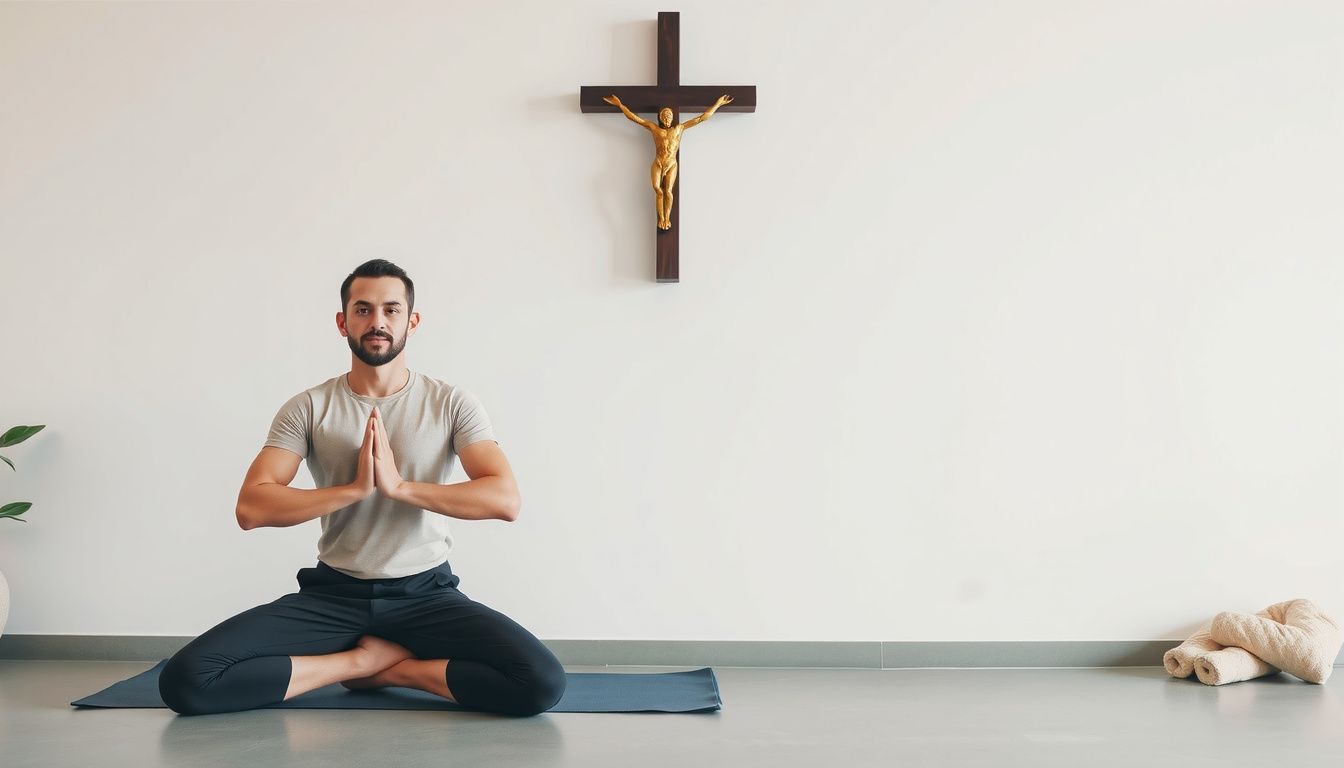
Is yoga against Christianity? This question pops up often if you’re a Christian considering yoga for flexibility, stress relief, or general wellness. There’s a lot of discussion—some say yoga is just exercise, others warn it’s spiritually risky. As someone who’s researched religion and holistic health, I’ll help you unpack the facts, beliefs, and misconceptions.
You’ll get a clear view of yoga’s roots, how it relates to Christian values, and how churches approach it. Let’s help you decide what fits your faith, health, and conscience.
- Yoga’s origin: Ancient India, tied to Hinduism and Buddhism.
- Christian view: Varies—some accept as exercise, others see spiritual conflict.
- Main concerns: Spiritual practices, meditation focus, religious symbols.
- Practical use: Many adapt yoga for physical and mental health, omitting spiritual elements.
Understanding the Origins of Yoga
Yoga traces back over 2,000 years to ancient India. Its earliest forms are linked to Hindu, Buddhist, and Jain traditions, used as a spiritual discipline for self-realization. Traditionally, yoga involves physical postures (asanas), controlled breathing (pranayama), and meditation.
The goal wasn’t just health—it was union with the divine or enlightenment.
Modern Western yoga often focuses on physical wellness, flexibility, and stress relief. However, some classes or teachers still include chants, mantras, or spiritual themes. Knowing this context helps you see why some Christians pause before joining a yoga class.
Christian Beliefs and Spiritual Practices
Central to Christianity is belief in one God, salvation through Jesus Christ, and living according to biblical teachings. Christian practices include prayer, worship, Bible study, and fellowship. Most Christians avoid practices that might conflict with these core beliefs or that appear to honor other gods.
Christianity encourages spiritual disciplines, but always focused on Christ. Practices like meditation or contemplation exist, but they’re rooted in Scripture and the Holy Spirit, not in seeking union with impersonal divinity.
Why Some Christians Question Yoga
Some Christians raise concerns about yoga’s spiritual roots. They worry that certain postures, chants, or meditations could unintentionally honor other gods or open one’s mind to non-Christian influences. There’s also a fear of syncretism—blending faiths in a way that dilutes Christian doctrine.
Concerns often focus on:
- Chanting or reciting mantras in Sanskrit
- Practicing yoga in spaces with Hindu symbols or statues
- Guided meditations that encourage “emptying the mind”
You might find these elements in some studios or styles, while others are purely fitness-based.
Common Misconceptions About Yoga and Religion
It’s easy to misunderstand yoga’s role. Some believe all yoga is inherently religious; others think it’s always secular. The truth sits in between.
Not all yoga instructors include spiritual content, and not every yoga class is a religious ritual.
Three common misconceptions:
- All yoga worships Hindu gods. In reality, many classes are secular.
- Yoga is just stretching. Its roots are deeper, but you can practice for health only.
- Christians can’t do any yoga. Many believers adapt yoga mindfully, avoiding spiritual elements.
Being informed helps you make a choice that fits your beliefs.
Examining Yoga’s Physical and Spiritual Elements
Yoga’s physical side—postures, breathing, and stretching—offers well-documented health benefits: increased flexibility, reduced stress, and better balance. These elements don’t require any spiritual commitment.
The spiritual side can include chanting, meditating on Hindu concepts, or using Sanskrit mantras. Some studios and teachers blend these in, others do not. For example, a “power yoga” class at a gym may never mention spirituality, while a traditional studio might include chanting “Om.”
Practical example: Sarah, a Christian mom, attends a yoga class at her local YMCA. The class focuses only on movement and breath—she skips or silently reinterprets any parts she’s unsure about.
Views from Christian Leaders and Denominations
Christian responses to yoga vary widely. Some denominations, like the Roman Catholic Church and certain Evangelical groups, have issued cautions or outright discouraged yoga because of its spiritual roots. Others, like some mainline Protestant churches, allow it as exercise if you avoid spiritual elements.
| Denomination | Typical View on Yoga |
|---|---|
| Roman Catholic | Cautious—prefer Christian alternatives, warn against non-Christian spiritual content |
| Evangelical | Often discouraged, especially with spiritual aspects |
| Mainline Protestant | Generally permitted as exercise, with discernment |
| Non-denominational | Mixed—up to individual conviction |
Your church’s stance can provide guidance as you decide.
How to Approach Yoga as a Christian
If you’re considering yoga, start by clarifying your intent. Are you seeking fitness, or spiritual growth? Choose classes that match your goals—many gyms, studios, and online videos offer secular yoga focused only on physical benefits.
Tips for Christians:
- Ask teachers if the class involves spiritual practices or chanting.
- Replace mantras with silent prayer or Scripture meditation.
- Avoid settings with religious symbols outside your faith.
Making these adjustments allows you to enjoy yoga without compromising beliefs.
Making an Informed Choice for Your Spiritual Path
Ultimately, the decision to practice yoga is personal and should be made prayerfully. If you feel uneasy, consider Christian-based alternatives like “Holy Yoga” or “PraiseMoves,” which blend physical postures with Christian worship and meditation.
Talk with trusted faith leaders, and listen to your conscience. Remember, your spiritual well-being is as important as your physical health. Weigh the benefits and risks, and make a choice that brings peace and growth in your faith journey.
60-Second Recap
- Yoga’s origins are spiritual, but modern practice varies widely in religious content.
- Christian beliefs emphasize loyalty to Christ; some worry yoga’s spiritual roots may conflict.
- Misconceptions abound—many Christians practice yoga safely by omitting spiritual elements.
- Denominations differ: some warn against yoga, others permit it as exercise.
- Pray, seek advice, and choose yoga only if it aligns with your faith and conscience.